Is machine monitoring worthwhile?
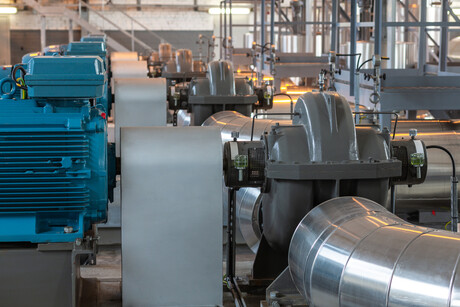
Choosing the right maintenance strategy depends on balancing cost, system criticality, and the value of early fault detection through condition monitoring.
There are many ways of monitoring machines or even entire systems. However, monitoring for the early detection of damage and defects does not necessarily make good economic sense for every machine or system.
Maintenance strategies
Run-to-failure maintenance
Failure-based or reactive maintenance is also known as run-to-failure maintenance and is regarded as a passive strategy. With this form of maintenance, a system component is only replaced or repaired once it has actually failed. No information about the condition of the machine is collected or evaluated while the system is in operation. The problem with this approach is that the extent of the damage and the required restoration time cannot be predicted. The advantages of this approach are that no costs are incurred during smooth operation and the full wear reserve of the machine is utilised.
Failure-based maintenance is suitable for machines or components that are not critical to production, are easy to replace, and do not lead to expensive consequential damage.
The actual service life of machines and machine elements is often shorter than the basic rating life. Imbalance and misalignment (60%), bearing damage (20%), and other contributing factors such as structural problems, mounting issues and resonance (20%) are the most common causes that can lead to unexpected system failures and production downtime.
Preventive maintenance
In the case of preventive maintenance, it is assumed that a machine or system requires particular maintenance expenditure at defined time intervals. The definition of the time intervals is based on the average operating life of the system and on empirical values.
Since the time intervals in this maintenance strategy are fixed, they can be integrated in a targeted manner into existing production operations or downtime planning. However, they do not necessarily correlate with the actual condition of the system. It is therefore possible that maintenance measures will be carried out prematurely, thus making an unnecessary claim on resources.
Preventive maintenance is usually prescribed by the warranty provisions, as defined in the maintenance plan. When the warranty expires, a suitable monitoring strategy can be considered. In many cases, the switch is made to condition-based or predictive maintenance.
Condition-based maintenance
With condition-based maintenance, the machines and systems are not serviced on the basis of failures or time, but according to the established condition of the components. With this strategy, condition monitoring is used to carry out maintenance and repair work in accordance with the actual condition of a system or machine.
Different methods can be used in isolation as well as in combination to determine the current condition of the system. The outcome of the condition monitoring is incorporated into the planning of targeted maintenance measures, taking account of various parameters. The efficiency of the monitored machine is increased and an overall reduction in downtime costs is achieved.
Condition-based maintenance is suitable for process-critical systems, in which a high degree of accuracy is essential. As a rule, the cost of monitoring systems is already offset by preventing the first occurrence of consequential damage.
Predictive maintenance
Predictive maintenance is becoming increasingly important. The current condition of a system is not only considered by means of a defect analysis or causal investigation, but also optimised with the aid of accompanying measures. This is intended to further reduce the probability of a future failure in the long term.
The measures used can include an analysis of the machine history, special measurements to determine natural frequencies or phase relationships as well as improvements to the operating condition in the form of precision balancing and alignment.
Methods
Various non-destructive methods are available for recording the condition of a machine in operation. These include vibration analysis, lubricant analysis, thermography and endoscopy.
Vibration analysis
Vibration-based machine monitoring is a reliable tool for identifying and establishing the cause of machine problems at an early stage. With rotating machines in particular, this form of monitoring can detect a deterioration in machine condition early on, largely due to the increase in vibration behaviour.
Frequently detected sources of defects include imbalance, misalignments, rolling bearing damage and interlinking defects. Depending on the application, advance warning times of several months can be achieved with this measuring method. This method of condition monitoring offers considerable cost-saving opportunities if the operating life of the systems and machines can be almost fully utilised and their availability increased.
What is vibration analysis based on?
Simply put, vibration analysis is based on changing forces and power transmission processes. If the forces acting in the machine change, the vibration behaviour of the machine will also change. An increased vibration level with constant operating parameters indicates a deterioration in the machine condition.
Lubricant analysis
With lubricant analysis, the lubricant can be monitored directly in the machine by sensors or examined in the laboratory by taking samples. In most cases, viscosity, water content, contamination and aging are examined. In the offline monitoring of lubricating oil for solid and liquid contamination, samples are taken and examined at regular intervals.
The online monitoring of oil by sensors in the machine can take place either in the main oil flow or in a branched tributary. In addition to lubricating oil, it is also possible to monitor the condition of lubricating grease.
In such cases, offline monitoring is often used. Condition-based relubrication can also be achieved in conjunction with automatic lubricators.
Endoscopy
As an imaging method, endoscopy allows immediate conclusions to be drawn about the condition of components, such as rolling bearings and gear teeth, without necessitating the time-consuming process of dismantling the machine. The current condition can be clearly determined and documented in a video or image.
If the operating parameters, such as performance or speed reduction for example, or maintenance measures are adapted to the current condition, further damage propagation can be delayed.
Thermography
With thermography, heat sources caused by damage can be identified and monitored, both mechanically and electrically. The exceptional feature of this technology is that it not only targets the mechanical aspect of the system’s condition but is also applied to electrical components.
The major advantage of thermography is the rapid and contact-free recording of surface temperatures during operation. Using a photo produced in parallel, the temperature curves of a system or machine part can be assigned onsite and documented as the actual condition. Furthermore, any misalignment of motors, pumps or fans can often be detected in commissioning.
Structuring a condition monitoring system
Vibration monitoring systems
The selection and design of a suitable monitoring program is important for condition monitoring. Vibration monitoring is used very frequently. A structure is usually accompanied by standards, and the applicable standard for vibration analysis is DIN ISO 13373. For optimal planning, this standard recommends creating a flowchart to map the structure and implementation of an appropriate condition monitoring system. For successful vibration monitoring, the following points must be taken into consideration:
- Selection of the machines to be monitored
- Selection of a suitable measuring system
- Selection and designation of the measuring points
- Definition of the data acquisition interval
- Definition of the measurement configuration
- Recording of measurement data
- Evaluation of the measurement and trend data
- Recommended actions
- Reports and documentation
When is condition monitoring appropriate?
The answer to this question is essentially determined by the criticality of the system, which includes how important the system is to the production process and even the accessibility of the system in the event of repairs. Once the critical systems have been identified and the risk of failure has been assessed, the appropriate maintenance strategy can be defined for the system (in this case, condition-based maintenance).
Condition monitoring is a practical solution for critical and hard-to-reach systems. Early fault identification and analysis allow appropriate measures to be taken to reduce downtime and optimise maintenance.
Is condition monitoring complicated?
The decisive factors for answering this question are the level of specialist knowledge available and how condition monitoring is to be integrated into operation as a building block for optimising maintenance. Novices can start with simple solutions that do not require any prior knowledge and then gradually expand on their knowledge. Where specialist knowledge is lacking within the company and needs to be developed, the available options include:
- Becoming an expert: If a process engineer wishes to become an expert, they should obtain advice and training from experts with longstanding experience.
- Outsourcing: If an organisation is simply looking for its system to work and not encounter unscheduled downtime, then expert third-party assistance can be sought.
Does condition monitoring save money?
When used correctly, condition monitoring definitely saves money. In most cases, savings are already achieved following the initial activation of an alarm, simply due to the prevention of consequential damage. Avoided production downtime constitutes the greatest saving.
Incidentally, condition monitoring can be used regardless of whether the machine is new or old. In both cases, the condition can be determined from the initial measurement.
Success factors
The success of a condition monitoring system is primarily dependent on how well the solution is tailored to requirements. When choosing a partner, an organisation should pay attention not only to the available hardware and software, but also to the service and training concept, as well as proven experience.
Takeaways
Condition monitoring is worthwhile, both for individual machines and entire systems. Conclusions about possible defects can be drawn from vibration analysis as early as the initial measurement, even with old machines.
There is no single solution, rather multiple solutions that should be individually tailored to a plant’s systems, and different methods can be used in combination and may be an appropriate solution in certain cases.
The next era of generative AI in industry
Exploring developments in generative industrial AI and their implications for industry.
4 common causes of rotating asset failure and how to prevent them
Preventing failure of rotating assets with predictive maintenance using condition-monitoring...
Critical industries need to know how to isolate, rather than ignore
It is time for critical infrastructure organisations to act on ASD's warnings about...