Overpressure protection in critical systems: the role of rupture discs in preventing costly downtime
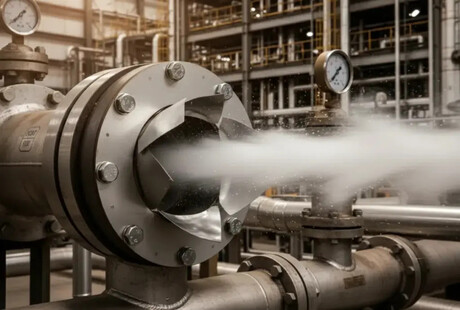
Whether in oil and gas, chemical processing, hydrogen production, power generation or industrial gas systems, pressurised equipment is fundamental to operations. However, when pressure exceeds safe limits, the consequences can escalate quickly, ranging from equipment damage and production loss to serious safety hazards.
Overpressure events are not rare exceptions. They are an inherent risk in systems where pressure fluctuates due to process variation, equipment cycling, blockages, thermal expansion or operational transients. For this reason, every pressurised system requires a reliable and predictable method of protection.
As a specialist in process instrumentation, Measurement Solutions has spent over four decades helping Australian process industries select, integrate and maintain the safety-critical devices that underpin plant integrity. Among the most widely used and highly reliable of these is the rupture disc, a non-reclosing pressure relief device designed to provide immediate, full-bore protection when system pressure exceeds a defined threshold.
Unlike mechanical relief valves, rupture discs operate as a passive safety barrier. When correctly specified and installed, they provide a fast, leak-tight and maintenance-free protection method that safeguards both equipment and personnel from overpressure events.
However, while rupture discs are conceptually simple, their correct application is highly technical, and incorrect selection or installation can introduce risks that compromise system reliability.
Why overpressure events occur in industrial systems
Overpressure is not always the result of catastrophic failure. In most industrial environments, it develops from predictable operating conditions such as:
- blocked discharge or downstream restriction
- compressor or pump malfunction
- thermal expansion of trapped fluids
- rapid phase change or flashing
- valve failure or incorrect isolation
- process upsets or sudden flow variation.
In cyclic or dynamic systems, repeated pressure fluctuations can also fatigue traditional protection devices over time, reducing their effectiveness or leading to maintenance challenges.
When these conditions occur, systems require a protection mechanism that responds instantly and consistently without relying on mechanical movement, recalibration, or external control signals.
This is where rupture discs play a critical role.
The operational cost of inadequate pressure protection
When pressure protection systems are not correctly designed or maintained, the impact is rarely limited to a single event. Instead, the consequences often accumulate over time.
1. Unplanned downtime
A single overpressure event can force a complete system shutdown. In production-critical environments, this may halt entire process lines, resulting in significant financial losses.
2. Equipment damage
Overpressure can damage vessels, pipelines, heat exchangers and compressors. Even if failure does not occur, repeated stress reduces equipment lifespan.
3. Safety risks
Pressurised systems often contain hazardous, toxic or flammable media. Failure to control overpressure can create serious safety incidents.
4. Relief valve fouling and leakage
Conventional pressure relief valves can be affected by corrosion, fouling or fugitive emissions. In some cases, they begin to leak or fail to reseat properly, reducing system integrity.
5. Maintenance burden
Frequent testing, recalibration, and replacement of mechanical relief devices increases operational cost and introduces additional downtime risks.
In many facilities, these issues are not caused by a lack of safety systems, but by limitations in how those systems are applied.
How rupture discs provide reliable overpressure protection
A rupture disc is a non-reclosing pressure relief device designed to burst at a precise pressure, providing immediate full opening of the system for rapid pressure release.
Unlike spring-loaded relief valves, rupture discs have no moving parts. They remain completely sealed during normal operation and activate only when a defined burst pressure is reached.
This makes them particularly effective in applications requiring:
- zero-leak tightness
- fast response to overpressure events
- protection against corrosive or toxic media
- isolation of downstream equipment
- high-integrity safety barriers.
Measurement Solutions supplies a comprehensive range of Continental Disc rupture discs, including forward-acting, reverse-acting, sanitary and non-fragmenting designs, providing reliable overpressure protection solutions tailored to a wide range of industrial operating conditions.
Forward-acting discs are designed to burst under tensile stress and are typically used in lower to moderate pressure applications. Reverse-acting discs operate under compressive loading and offer higher operating-to-burst pressure ratios — often up to 95% — making them particularly suitable for cyclic, pulsating or high-stability applications.
Application challenges and selection considerations
While rupture discs are highly effective, their performance depends heavily on correct specification and application design. Unlike reusable devices, rupture discs are engineered to precise operating conditions and cannot be reused after activation.
This creates several key engineering considerations.
1. System operating conditions
The relationship between normal operating pressure and burst pressure is critical. Selecting a disc that operates too close to system pressure can lead to premature fatigue, while an oversized margin may reduce protection effectiveness.
2. Process media type
Gas, liquid and multiphase flows behave differently during pressure relief. Some rupture discs are specifically designed for compressible media, while others are optimised for liquid service.
3. Cyclic or pulsating pressure
In systems such as compressors or pumps, repeated pressure cycling can fatigue traditional protection devices. Reverse-acting rupture discs are often preferred in these environments due to their higher resistance to fatigue.
4. Corrosive or hazardous media
In applications involving chlorine, ammonia, hydrogen sulphide or other corrosive substances, rupture disc material selection becomes critical to ensure long-term integrity and safety.
5. Integration with relief systems
Rupture discs are often used in combination with safety relief valves. In these configurations, they act as a primary isolation barrier, preventing leakage, corrosion or fouling of downstream valves.
In practice, the right configuration is rarely obvious from a datasheet alone. Selection typically benefits from a structured conversation about service conditions, media compatibility and the broader relief strategy.
Practical example: protecting a cyclic compressor system
In a high-pressure gas compression system, operators experienced recurring pressure fluctuations caused by varying downstream demand. Over time, these fluctuations led to repeated stress on conventional relief devices, resulting in increased maintenance requirements and occasional unexpected shutdowns.
The issue was not a single overpressure event, but continuous cyclic loading that gradually degraded system reliability.
By implementing a reverse-acting rupture disc designed for high operating-to-burst pressure ratios and fatigue resistance, the system gained a more stable and predictable overpressure protection mechanism. The rupture disc acted as a reliable safety barrier while reducing mechanical stress on downstream relief components.
This improved operational stability and reduced maintenance intervention, particularly in high-cycle operating conditions.
Why rupture discs remain essential in modern process safety
Despite advances in automation and digital monitoring, mechanical overpressure protection remains a fundamental requirement in industrial systems. Sensors and control systems can detect pressure changes, but they cannot physically relieve pressure during a sudden or catastrophic event.
Rupture discs provide a final layer of protection that is independent of power, software or communication systems. This simplicity is their strength. When correctly applied, they offer predictable performance, rapid response and complete isolation until activation.
They are also increasingly being used as part of integrated safety strategies, particularly in applications where environmental protection, emission control and hazardous media containment are critical considerations.
Specifying and supporting rupture disc installations
Selecting the right rupture disc is only part of a successful installation. Each application requires careful evaluation of operating pressure, temperature, media compatibility, mounting configuration and the interface with downstream relief devices.
Measurement Solutions provides specification and application support across this process, including:
- disc selection against process conditions and burst pressure requirements
- material compatibility review for corrosive and hazardous services
- sizing and orifice calculation in line with relevant standards
- holder and accessory selection, including burst indicators
- site support during installation and commissioning.
Customers benefit from working with a local Australian team that understands both the product and the local regulatory and operational environment.
Building more reliable pressure protection strategies
Effective overpressure protection is not achieved by selecting a device in isolation. It requires a system-level approach that considers:
- operating conditions and process variability
- equipment configuration and protection hierarchy
- media characteristics and safety requirements
- maintenance strategy and lifecycle planning
- integration with monitoring and control systems.
When rupture discs are correctly specified and integrated into a broader protection strategy, they become a highly reliable safeguard that supports both operational continuity and safety performance.
In many industrial environments, overpressure risks are not unexpected, they are inevitable. The question is not whether pressure excursions will occur, but how effectively the system responds when they do.
Rupture discs provide a simple yet highly engineered solution to this challenge. By delivering fast, reliable and leak-tight pressure relief, they help protect critical equipment, reduce downtime risk and enhance overall system integrity.
In complex process industries where safety and uptime are tightly linked, reliable overpressure protection is not optional, it is essential.
To select or customise the right rupture disc for your application, contact the Measurement Solutions team or learn about the key considerations when choosing a rupture disc.
About Measurement Solutions
Measurement Solutions is part of the Bestech Australia Company, a leading supplier of measurement, instrumentation and automation solutions in Australia and New Zealand. As a part of the Bestech Company, Measurement Solutions customers gain access to a national sales and engineering footprint, with local technical support, application engineering and after-sales service available across every state. This combination of specialist product expertise and broad national presence ensures that critical instrumentation is not only well-specified, but supported throughout its lifecycle.
A guide to a cost-effective SIS
Bridging the gap between safety compliance and efficient deployment.
The missing middle: Solving the logic solver gap in SIS design
Why safety professionals need a new class of logic solver; one that bridges the enormous gap...
The Machinery Regulation will be mandatory in less than a year — are you ready?
The EU Machinery Regulation and the Cyber Resilience Act will reshape how manufacturers and...