Beijer Electronics X3 web: industrial reliability for web-based HMI with WebIQ
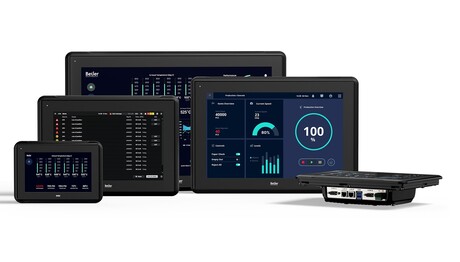
In today’s rapidly evolving industrial landscape, market demand for flexible, scalable, and future‑ready human‑machine interface (HMI) solutions has never been greater. Digitalisation, IIoT adoption and increased expectations for remote monitoring and control are driving manufacturers, marine operators, and system integrators to rethink traditional control interfaces. A new era of HTML5 web-based HMI technologies is emerging — and at the forefront of this shift is Beijer Electronics’ X3 web, paired with the powerful WebIQ software platform.
Responding to market demand: Why web-based HMI matters
Modern automation systems are increasingly expected to provide seamless connectivity, multi‑device access, and future‑proof scalability — all without sacrificing performance or cybersecurity. Traditional HMI platforms, often dependent on proprietary software or device‑specific configurations, can limit flexibility and increase long‑term costs. In contrast, web-based HMIs using open standards such as HTML5, CSS, and JavaScript enable intuitive visualisation and control that works across desktops, panels, tablets, and mobile devices without additional plugins or licensing restrictions.
This trend reflects broader market needs: industrial facilities want scalable interfaces accessible from any device, operations teams demand responsive remote access, and system integrators seek tools that reduce development time while maintaining robustness. This is where X3 web and WebIQ come together to offer a compelling solution.
Introducing X3 web: built for industrial reliability
The Beijer Electronics X3 web series represents a new generation of industrial HMIs combining robust performance, cybersecurity, and modern web technology. Designed from the ground up for harsh industrial conditions, X3 web devices are certified for a wide range of environments — from manufacturing floors to marine bridge controls and extreme, rugged applications.
At its core, X3 web integrates HTML5 technology with industrial‑grade hardware performance. This enables seamless web-based interaction, crisp visuals, and intuitive operation aligned with modern user expectations. Beyond traditional touchscreen functionality, the platform is built to support WebIQ, Beijer’s 100% web-based HMI design and deployment toolbox.
Key hallmarks of the X3 web family include:
- HTML5 support for industry‑wide use: Exploiting open, scalable web standards for reliable performance across industries.
- Comprehensive certifications: UL, CE, KCC, FCC, marine certifications for bridge and engine control applications, and UL, ATEX, IECEx for hazardous areas ensure broad compliance and suitability.
- Robust cybersecurity: Designed and built with cybersecurity in mind, adhering to IEC 62443‑4‑2 standards for safe and secure operational environments.
- Docker support: Native support for containerised applications increases flexibility and simplifies deployment.
-
Multiple sizes and applications: Available in screen sizes from 7″ up to 21″, the X3 web series can fit a wide variety of application requirements
.
These features, combined with hardware‑accelerated graphics and high‑resolution displays, ensure that X3 web devices deliver a premium user experience.
WebIQ: the perfect match for X3 web
While the X3 web hardware provides the industrial foundation, WebIQ serves as the software enabler that unlocks the power of web-based HMI design and deployment. Built entirely on open web standards like HTML5, CSS, and JavaScript, WebIQ enables engineers and system designers to create responsive, intuitive interfaces with minimal code.
Instead of complex programming, engineers can use WebIQ’s drag‑and‑drop environment to build professional HMI solutions quickly. These solutions automatically adapt to different screen sizes and device types — whether it’s a panel on a machine, a desktop display in a control room, or a tablet used on the factory floor. WebIQ allows for rapid prototyping, easy modifications, and reduced long‑term maintenance costs.
As industrial systems become more interconnected, WebIQ’s edge‑based capabilities allow HMIs to function as gateways for cloud data, supporting analytics and remote monitoring — critical functionality as OT (Operational Technology) environments increasingly blend with IT (Information Technology) infrastructure.
Tailored solutions for tough environments
One of the most compelling aspects of the X3 web series is how it addresses specific environmental challenges — rather than offering a one‑size‑fits‑all solution. Three key variants of X3 web reflect this commitment.
1. Industrial environments (X3 pro web)
Manufacturing environments demand HMIs that can withstand continuous use, provide reliable and real‑time operational feedback, and integrate seamlessly with PLCs and automation systems. X3 pro web is designed for these fast‑paced settings, ensuring precise control and visualisation for production lines, assembly systems, and packaging equipment.
2. Marine environments (X3 marine web)
Marine applications present unique challenges such as vibration, humidity, and regulatory certifications for vessel operations. The X3 marine web variant is optimised for critical marine control applications like bridge navigation and engine monitoring. With marine‑specific certifications and displays suited to maritime use, it ensures reliable operation even in corrosive and dynamic conditions at sea.
3. Extreme conditions (X3 extreme web)
For environments exposed to wide temperature swings, shock, dust, or hazardous atmospheres — such as mining, oil and gas, or offshore facilities — the X3 extreme web models are engineered to deliver dependable performance. These ruggedised HMIs come with extended certifications for explosive atmospheres and environmental stress, making them ideal for operations where reliability is mission‑critical.
In each scenario, the same WebIQ platform can be used to design and manage the HMI interface, allowing engineers to reuse content, scale solutions, and reduce engineering effort — regardless of the physical environment.
Driving a more connected future
Demand for web-based HMIs is more than a technological trend — it’s a shift in how industrial systems are managed, monitored, and expanded across digital platforms. Users seeking flexibility, cross‑device accessibility, and integration with cloud and edge analytics are leading the charge for web‑centric visualisation tools. WebIQ paired with X3 web addresses this shift head‑on — offering a scalable, secure, and responsive solution that fits today’s automation demands and tomorrow’s innovations.
By combining industrial reliability with the openness and flexibility of web technology, Beijer Electronics X3 web unlocks new possibilities across industries — from manufacturing and process control to marine and rugged applications. With WebIQ’s intuitive, web-based development environment, engineers and integrators can deliver powerful, flexible HMI solutions that work anywhere, anytime, and on any device.
For more information about Beijer Electronics X3 web, please visit Beijer’s website.
Best design practices: Creating a high-performance HMI
Creating a high-performance HMI will enhance operator efficiency.
AVEVA Plant SCADA 2020 R2 taps into the full potential of the AVEVA portfolio
When Citect became part of Schneider Electric and then AVEVA, Citect SCADA was integrated with...
Citect SCADA lives on as AVEVA Plant SCADA
Citect SCADA has been a trusted SCADA platform for over 35 years and continues to evolve.