Valves, data centres and the invisible infrastructure of Australian industry
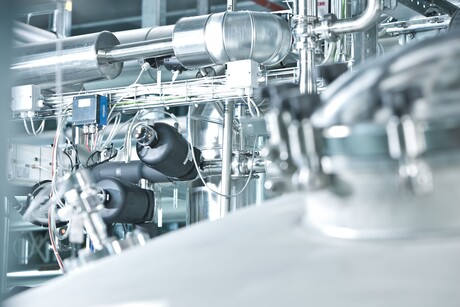
Walk through any brewery, mine site or water treatment plant and you’ll see the same thing: kilometres of pipework, banks of valves and quiet little boxes full of electronics.
Today, however, the conversation in boardrooms is dominated by digital transformation, AI and data. Australia already hosts more than 250 data centres, putting us among the top locations globally despite our size.
There is a harder truth as well: data centres are energy- and water-hungry. Cooling systems, water use and energy efficiency are no longer ‘engineering details’ buried in the back of a P&ID, they are front-page issues. And the decisions that shape those outcomes are often made in the last metre of the process: the valve, the sensor, the control loop that either wastes or preserves resources every second of every day.
Across manufacturing, mining and water, I see the same pattern emerging. Australian businesses are pouring billions into digital technologies, and surveys show industrial leaders prioritising intelligent automation, IIoT connectivity and real-time analytics. Yet when I visit sites, I still find operators walking around with clipboards, manual valves that ‘no one wants to touch’, and brilliant software projects starved of reliable field data.
Simply, we are over‑investing in dashboards and under‑investing in instrumentation and control. We are trying to build digital twins on foundations of uncertain measurements, orphaned valves and aging control panels. We celebrate cloud strategies while tolerating process skids that no one has properly documented for 15 years. In that environment, every promise of optimisation is built on sand.
A valve is not just a valve. It is the difference between a stable control loop and a system that hunts and trips. Between a cooling plant that quietly maintains setpoint and one that spikes energy demand on hot days. Between a water plant that can confidently move to demand‑driven operation and one that must run flat-out ‘just in case’. In a world of escalating energy costs, water constraints and ESG scrutiny, that is not a minor detail; it is a strategic lever.
More consideration needs to be given to the full instrumentation and valve lifecycle, from installation through commissioning, maintenance, optimisation and, when needed, replacement, so that a plant’s performance in year 10 is equivalent to year one.
From a sustainability perspective, this matters as much as any new ‘green’ announcement. Where it is technically and commercially viable, it is becoming more prevalent to maintain, upgrade and extend the life of good equipment than to rip and replace. This reduces capex, reduces embodied carbon and avoids the waste that comes with a constant churn of new hardware.
Of course, there are times when the right answer is a new technology or a full redesign, but that decision should come from a long‑term view of the process.
For data centres, that might look like smarter control of cooling water and refrigerants, dynamic setpoints linked to real‑time load, or high‑integrity leak detection that protects both assets and communities. In mining, it might be dust suppression and tailings circuits that are instrumented and automated enough to support credible ESG reporting. In food and pharma, it might be hygienic skids that arrive with validated, standardised automation out of the box, and a lifecycle support plan, so operators can focus on quality, not troubleshooting.
If we are serious about making Australian industry both competitive and sustainable, we have to respect the ‘boring’ parts of the system. Valves, sensors and control cabinets are not glamorous, but they are where energy, water and product are won or lost, year after year.
My challenge to leaders in manufacturing, processing, mining and digital infrastructure is this: bring your operations and automation teams into strategic discussions early. Ask where your measurements are weak, where your control is fragile, and where complexity is quietly driving risk and unnecessary replacement. And then demand more from those of us who supply the hardware, not just catalogues, but genuine partnership across the full lifecycle of your assets.
|
Because in the end, a valve is never just a valve. It is a decision about how seriously you take reliability, efficiency and sustainability, not just on day one, but for the decades that follow. |
 |
The roles of the vendor and EPCs in the project bidding process
Mining automation projects work best when vendors and EPCs work together in the bidding process.
Remote telemetry for Tasmanian irrigation
Automation company Cromarty worked with RTU specialist Ovarro to develop a solution for remote...
Digital transformation for automotive product manufacturer
MotorOne Group has achieved digital transformation with a creative implementation of a Siemens...