Digital transformation for automotive product manufacturer
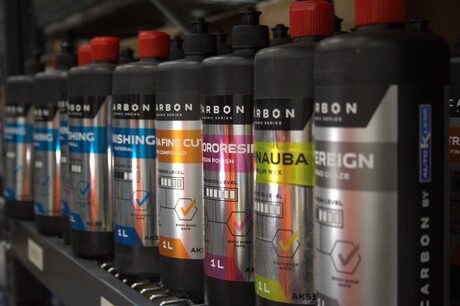
Australian automotive aftermarket solutions manufacturer MotorOne Group recently successfully implemented a new digital automation solution at its Melbourne facility, delivering 20% growth within months and creating a scalable foundation for future expansion.
Prior to the automation project, MotorOne’s chemical development processes relied heavily on manual operations, rather than standardised procedures. The company embarked upon a digitalisation project with the goal of achieving a higher degree of consistency, quality control and scalability for the company’s car wash and automotive care product lines. The company wanted to introduce a recipe-driven manufacturing process, enhance quality management and have better control of inventory to reduce waste and energy consumption.
“We really decided once we invested in this beautiful facility that we needed to automate, and we needed to be in front of the technology. If we don’t get the consistency right, the cost is enormous,” explained Greg Lewis, CEO of MotorOne.
The digital transformation focused on the facility’s tank farm, where car wash and derivative products are formulated across standardised tanks at the facility. The solution needed to address recipe management, material traceability and process standardisation while providing a foundation for future expansion.
The project, delivered in partnership with Siemens’ automation solution partner Mescada, saw MotorOne become the first company globally to integrate Siemens’ cloud-based PCS Neo engineering platform with Siemens Opcenter’s Manufacturing Execution System (MES), establishing a seamless digital thread spanning enterprise planning through to process control.
Siemens PCS Neo is a cloud-based evolution of the established PCS 7 platform that enables multiple engineers to collaborate simultaneously on system development and maintenance. The web-based production control system integrated seamlessly with Siemens Opcenter Manufacturing Execution System (MES), enabling MotorOne to create a comprehensive digital factory architecture based on Industry 4.0 standards.
While both technologies have been deployed separately in various industrial applications, the specific integration architecture implemented in this facility was a first for Siemens. The complexity of creating bidirectional communication between the cloud-based PCS Neo and Opcenter MES, while maintaining real-time process control and accurate ERP data exchange, required extensive development and testing that positioned this as a pioneering implementation.
“PCS Neo is an evolution of PCS 7. It uses the same hardware, but the software that sits on top means it’s cloud-based, allowing more accessibility,” said Darryl Kaufmann, Head of Digital Industries at Siemens AUNZ. “What’s special about this project is we’ve helped a small-medium enterprise implement a digital transformation strategy while introducing brand new technology that is future-proof.”
Each tank at the manufacturing facility incorporates standardised I/O points and devices, enabling consistent recipe execution based on work orders generated by the MES.
The automation implementation has delivered significant operational improvements across multiple metrics. Recipe management has been completely standardised, with all manufacturing processes now captured and documented in detailed procedures. Quality control has been enhanced through barcoding systems that prevent incorrect raw materials from entering production batches.
Cornell D’Couto from Mescada, the system integrator, highlighted the sustainability benefits: “Having better control of your system processes means there’s less rework and the ability to save on materials. Sustainability and waste reduction has been a key factor as part of this process.”
The system provides enhanced visibility and traceability throughout manufacturing operations, enabling MotorOne to optimise production timeframes and support increased output. Process variability has been significantly reduced through precise ingredient control and standardised recipe execution.
Beyond immediate operational improvements, the digital transformation establishes a scalable platform for MotorOne’s expansion plans. The standardised approach across the initial eight tanks provides a clear pathway for extending automation to additional production capacity as demand grows.
“That’s going to allow us to double or triple our growth from where we are,” Lewis said. “We’ve already seen 20% growth just in a few months since we rolled out this digitalisation project.”
Phone: 137 222
Fisher IC2 cryogenic top-entry control valve
The Fisher IC2 cryogenic top-entry control valve is designed for cold box applications in air...
ABB Ability System 800xA 7.0 DCS
ABB has launched its System 800xA 7.0 DCS enabling greater flexibility and modularity.
Emerson DeltaV version 16.LTS distributed control system
Emerson has included software-defined automation in its latest distributed control system release.