ANSTO celebrates 20 years of OPAL supporting research and innovation
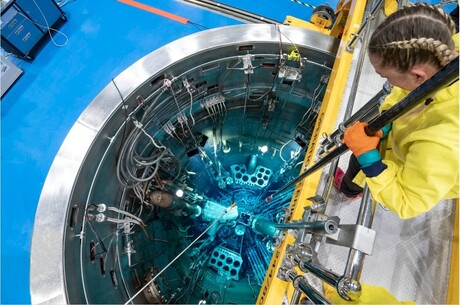
The Australian Nuclear Science and Technology Organisation (ANSTO) is celebrating 20 years since ANSTO’s OPAL multi-purpose reactor first achieved criticality at its Lucas Heights campus south of Sydney.
Criticality is the point at which a controlled nuclear chain reaction becomes self-sustaining. It was the milestone that marked OPAL’s transition from construction project to operational scientific capability.
From its home on ANSTO’s leafy Lucas Heights campus in southern Sydney, OPAL has quietly become one of Australia’s most important pieces of scientific infrastructure and is regarded internationally as one of the world’s most advanced multi-purpose research reactors.
ANSTO CEO Shaun Jenkinson said OPAL’s 20-year anniversary was an opportunity to recognise the reactor’s enduring contribution to Australians.
“For 20 years, OPAL has delivered benefits that reach into hospitals, industries, universities and communities across Australia,” he said. “It is one of the clearest examples of how nuclear science directly improves lives.
“Every Australian will, on average, require two nuclear medicine procedures in their lifetime. If you or a loved one has undergone a diagnostic imaging scan such as a SPECT scan, it is highly likely the nuclear medicine administered came from Lucas Heights.
“Similarly, if you drive an electric or hybrid vehicle, or have caught a high-speed train overseas, there is a very good chance that a small component of that technology is able to function because of OPAL.”
OPAL is the centrepiece of some of ANSTO’s world-class research and commercial facilities. Over its lifetime, OPAL has supported the production of more than 10 million nuclear medicine doses, used in the diagnosis and treatment of a range of medical conditions and diseases.
As the world’s largest irradiator of Neutron Transmutation Doped silicon, OPAL helps produce high-performance semiconductors used in electric vehicles, smart grids, renewable energy infrastructure, robotics and aerospace technologies. More than 900 tonnes of silicon ingots have been irradiated in the OPAL pool and used worldwide in technologies supporting advanced manufacturing and the clean energy transition.
The neutrons produced in OPAL also enable vital scientific research through the Australian Centre for Neutron Scattering. Over the past 20 years, more than 8000 scientific experiments have supported discoveries in human health, the environment, climate change, advanced manufacturing and materials science.
“ANSTO is highly regarded as a global leader in nuclear research and technology, and this reputation is built on the enormous capabilities of OPAL,” Jenkinson said. “Importantly, as Australia strengthens its nuclear capabilities, OPAL remains a nationally important asset — supporting sovereign expertise, training the next generation of nuclear specialists, and demonstrating the value of sustained investment in nuclear science and technology.
“It plays a crucial role in the training and development of Australia’s growing nuclear workforce, including for future national priorities such as AUKUS.”
The design, construction and commissioning of OPAL was completed over a four-year period by Argentinian nuclear technology company INVAP, alongside its Australian alliance partners John Holland Construction and Engineering and Evans Deakin Industries Limited.
At the peak of construction, the project employed more than 500 workers onsite, making it one of the most complex construction projects undertaken at ANSTO’s Lucas Heights campus.
Across ANSTO’s more than 70-year history, it has operated Australia’s only three nuclear research reactors: HIFAR, Moata and OPAL. HIFAR safely operated for nearly 50 years until 2007.
First prospective tenants identified for Western Defence Forge
The Government of Western Australia says it has identified five preferred proponents for its...
Automated cell therapy manufacturing system wins Good Design Award
Celleo's Larkem V40 automates one of the last hand-done steps in making a cell therapy...
New wastewater facility opens in Western Sydney
The $1.2 billion Badu Yarragul Water Resource Recovery Facility at Kemps Creek aims to help...