Australia must rethink the foundations of industrial automation
By Carlos Urbano, Vice President – Industry, Schneider Electric
Thursday, 04 December, 2025
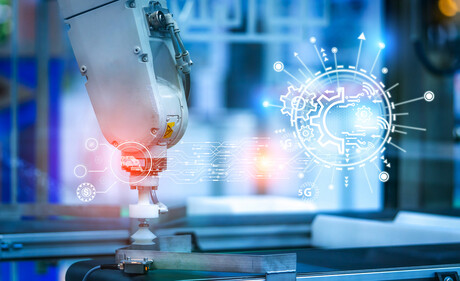
Australia’s manufacturing sector is at a pivotal moment. Competitive pressure, sustainability expectations, energy costs and a new wave of digital tools are converging, exposing the limits of the automation approaches that have defined industrial production for decades.
Across industry, conversations are shifting. Manufacturers no longer ask whether they should adopt digital technologies. They are asking how to build an automation environment that can keep pace with them. The challenge is not ambition; it is architecture. This is where the sector’s next competitive advantage will be won or lost.
For years, industrial automation was built on systems designed for stability, isolation and long lifecycles. These systems served their purpose well, but they belong to an era where operational change was slow and integration requirements were simple. The technologies now reshaping manufacturing — from AI-driven optimisation to real-time analytics and low-latency decision engines — demand a fundamentally different level of flexibility.
The shift is already underway. Manufacturers want automation platforms that are open, interoperable and vendor-agnostic. They want to adopt AI tools without rebuilding entire control systems. They want access to the thousands of new industrial applications emerging globally, not to a fraction of them limited by proprietary interfaces. And they want the confidence that decisions made today will not restrict their options tomorrow.
This desire for openness is not philosophical; it is operational. When a modern facility needs to trial a new optimisation algorithm, integrate additional sensors or adopt an emerging AI model, the question should not be whether the system will allow it, but how quickly it can be done. That expectation, more than anything else, is driving the momentum towards flexible, software-led automation.
AI is accelerating this shift. What was once explored as a future possibility is being tested in live environments — improving yield, reducing waste and identifying process inefficiencies that traditional tools simply cannot detect. The interest is practical and immediate: manufacturers want AI that strengthens decision-making and provides operational certainty. But AI cannot flourish on rigid foundations. It requires systems that support continuous iteration, transparent data pathways and seamless integration across OT and IT environments.
Sustainability is reinforcing this direction. Manufacturers are facing growing pressure to reduce energy use and resource consumption, yet the most meaningful gains come from deeper operational insight — something only modern automation can deliver. When organisations talk about lowering emissions, they are increasingly talking about an automation strategy. Efficiency and sustainability are no longer parallel goals; they are the same outcome delivered through the same transformation.
Meanwhile, the speed of technological innovation continues to accelerate. Industrial software development has exploded, with thousands of new applications created daily. This pace will not slow, and manufacturers cannot afford systems that evolve at a fraction of that speed. To remain competitive, automation environments must be capable of absorbing innovation continuously, without the disruption of major hardware overhauls.
This is where Australia has a genuine opportunity. The technical fluency of local teams, combined with an openness to adopting new approaches, positions the sector to move faster than many of its global counterparts. What Australian manufacturers often lack is not capability, but the enabling architecture. When modernisation is approached not as a procurement exercise but as a strategic redesign of how automation functions in the organisation, the full potential of AI, sustainability gains and operational flexibility becomes achievable.
The real inflection point is that the future of manufacturing will not be shaped by who adopts the most technology, but by who builds the most adaptable systems. The winners will be the organisations that view automation not as a fixed asset, but as a living platform — one that supports constant evolution and embraces a broader ecosystem of tools, partners and innovation paths.
Australian manufacturing has a narrow but powerful window to lead. By shifting from rigid, hardware-bound systems to open, software-defined architectures, the sector can position itself at the forefront of global competitiveness.
The technology is ready. The capability is here. What’s needed now is a willingness to rethink the foundations and build automation environments prepared for a future that will not wait.
80% of ANZ operational systems hit with a cyber attack in the past year
A recent survey has found that with an average financial impact of $2.04m, cyber attacks on OT...
Why quantum is our next big bet after AI
Equating 'quantum' with only 'quantum computing' risks missing out on the...
IMARC 2026 will bring the mining world to Sydney
Now is the time for robust conversations and new thinking as we seek solutions to support mining...