4 common causes of rotating asset failure and how to prevent them
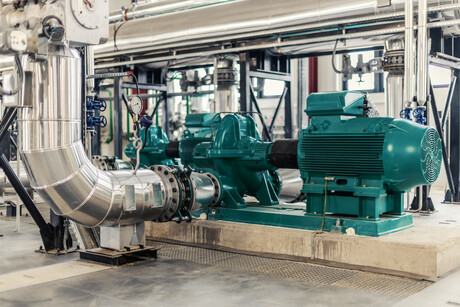
Preventing failure of rotating assets with predictive maintenance using condition-monitoring solutions.
It’s every facility manager’s nightmare: a catastrophic failure where one of the plant’s critical production assets fails without warning and causes secondary damage to an attached asset. Production is stopped and revenues are in jeopardy.
Industrial facilities may have hundreds of rotating assets such as motors, pumps, fans, compressors and gearboxes, and it can be a complex task to ensure they’re all healthy and running properly.
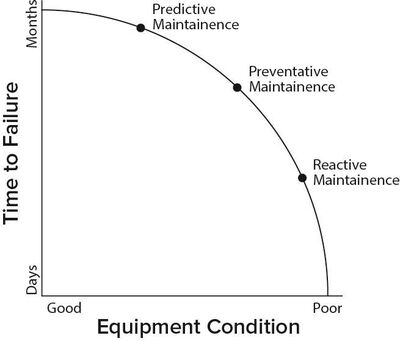
The practice of reactive maintenance, or running assets until failure, has long ago been replaced in most facilities by preventive maintenance, which prescribes routine checks and upkeep at preset intervals. In the case of vibration monitoring, the process is done by a technician walking the plant floor visually checking and lubricating rotating equipment and/or collecting vibration data with a mobile sensor.
While this is much better than the former method, there are drawbacks with preventive maintenance. Even if you’re checking your assets every month or two, that still leaves 30–60 days between checks for something to go wrong; and routine checks don’t always reveal gradual degradation of a component. In addition, the process is labour-intensive and costly.
Predictive maintenance (or condition-based maintenance) is the practice of placing sensors on the rotating assets and sending performance data to a controller for analysis and trend reporting. This method positively evaluates the health of the asset by continuous monitoring, and it is the best approach of the three.
Predictive maintenance improves upon preventive maintenance in two important ways: the fact that monitoring is continuous ensures there’s no gap of time in which problems can arise, and second, the process is automated, which eliminates the difficulty of tracking a large number of assets.
For rotating machinery, predictive maintenance uses vibration and temperature sensors to baseline normal running conditions and trend performance data over time. This process can detect gradually degenerating bearings early by trending and reporting changing vibration conditions.
The main benefit of predictive maintenance is the elimination of unexpected asset failures and unplanned downtime. And it allows for the assets to be serviced during planned downtime.
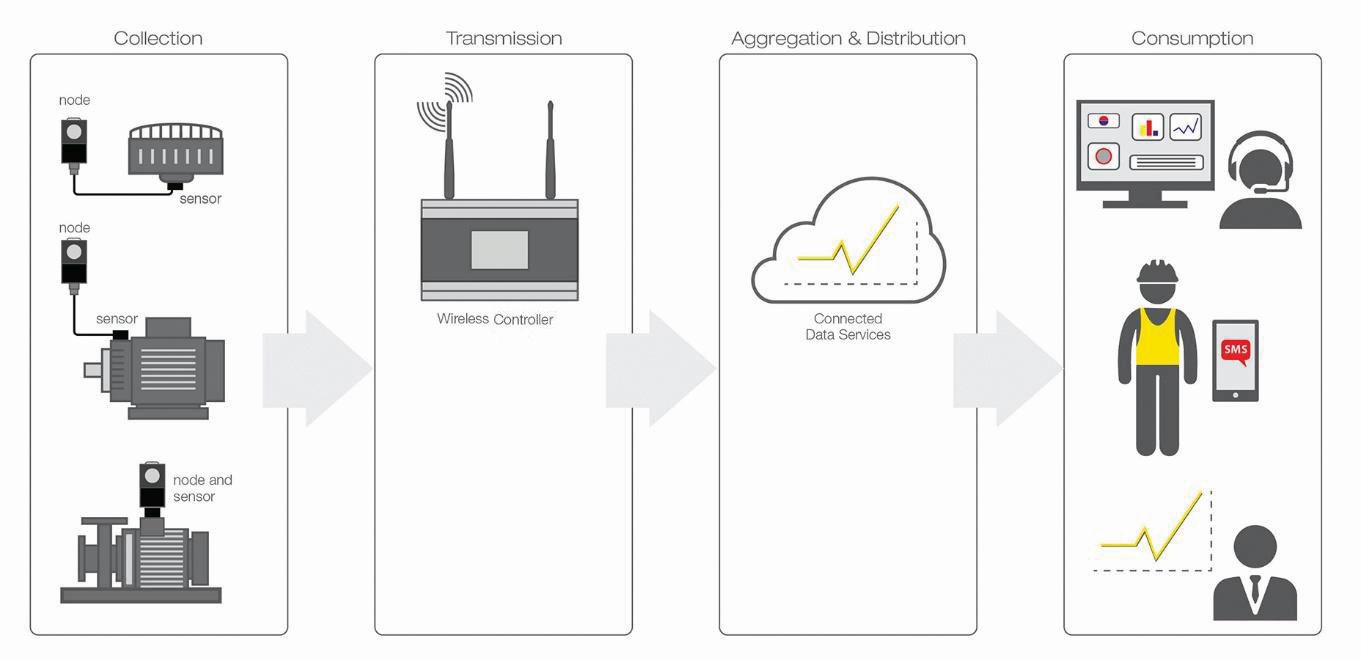
Industrial automation equipment makers offer a range of wireless monitoring devices that that can identify early problems in rotating assets, like motors, fans and pumps, by collecting and analysing vibration and temperature data. These devices make it cost-effective to monitor asset health parameters, set benchmarks, chart trends, set warning thresholds and trigger alarms.
This has advantages that include:
- Reducing the possibility of motor or attached equipment damage and the associated, unplanned downtime.
- Allowing advanced notice for corrective maintenance scheduling.
- Easily collecting data from remote locations via wireless communication and sending data to the cloud, and allowing remote access.
- Offering the ability to review data trended over longer periods of time.
- Having a more strategic approach to maintenance that reduces stress and uncertainty.
Vibration parameters: velocity and acceleration
Condition-monitoring equipment can identify component defects by evaluating the vibration parameters of velocity and acceleration. Velocity is the measurement of how fast an asset is moving back and forth (or vibrating) in multiple axes. Acceleration is the rate at which the velocity increases from one speed to another. Vibration sensors can detect a rotating asset’s vibratory movement: side-to-side, up-and-down, or back and forth. Once the acceleration waveform sample is collected by the controller, its vibration analysis software processes that data to produce a velocity measurement as well.
Faults found using the velocity parameter will typically be vibrations you are able to feel but not hear. Faults found using the high-frequency acceleration parameter will be vibrations you cannot feel, and you may or may not be able to hear.
A single sensor can properly collect accurate data in two axes, which is sufficient to analyse asset health. A second sensor can be added in certain circumstances to collect additional data.
Temperature
Condition-monitoring equipment also evaluates rotating asset health by trending bearing temperature. Awareness of temperature rise is an important part of the predictive maintenance regiment. While vibration anomalies first appear in the early stages of bearing-health decline — long before damage begins — rising bearing temperatures appear in the later stages. Unlike vibration parameters, there is no baselining of temperatures calculated by typical condition-monitoring systems.
Default thresholds are normally set at about 70°C for a first ‘alert’ and 80°C for a ‘warning’. Motor manufacturers specify temperature ranges for the asset, so users can change the default bearing temperature thresholds as needed.
Four common causes of bearing degradation in rotating assets
Bearing degradation is often the result of four common problems with rotating assets. These conditions are all related to either improper installation or improper maintenance, and each of them can be detected via an asset vibration signature with the right sensor, if installed and monitored properly.
1. Misalignment of the motor to the pump
To transmit power from a motor to a pump, the motor shaft is connected to the pump shaft. If these shafts are not properly aligned, it can cause early wear on the shafts, coupling or pump seal, as well as cause early bearing defects. Each of these can lead to reduced pump life.
There are two ways a motor and pump can be misaligned: parallel and angular. In a parallel misalignment, the centrelines of the motor and pump shafts are parallel but not lined up. In an angular misalignment, the motor and pump shafts are at an angle to one another.
A visual clue that may be present is the pump may be ‘soft-footed’ or ‘cock-footed’, in which one of its feet is slightly raised rather than sitting flatly on the floor, which is an indicator of the misalignment condition. Misalignment typically results in noise, vibration and eventually fluid leaks. It also reduces system efficiency.
Problems with motor-to-pump misalignment can be detected by analysing velocity and bearing temperatures.
2. Lack of proper bearing lubrication
Bearings can be under- or over-lubricated or fouled with dirt, dust or liquids, causing friction and heat, which will lead to bearing failure if undetected. When bearings lack proper lubrication, they will exhibit four stages of deterioration. Each stage has a distinct warning sign, but these warnings will go unnoticed without the proper monitoring sensor to collect and report the data.
Bearings will exhibit a high-frequency vibration, not audible to the human ear but detectable with vibration sensors.
The bearing vibration will generate a frequency spectrum composed of bearing cage vibration and ‘false spin’ vibration. It is at this and subsequent stages that typical vibration sensors are able to detect the onset of bearing problems.
Deformities will appear on the outer and inner bearing races, which will cause another level of vibration that generates a telltale band of frequencies.
Vibration may become audible, in a high pitch, and bearing temperature begins to increase.
Problems with lubrication can be detected with condition-monitoring systems by analysing high frequency acceleration, peak acceleration and bearing temperatures.
3. Misalignment of pump inlet or outlet pipe
Pump input and output pipes have flanges to bolt onto mating pipes. If these flanges don’t mate up exactly, it can put a strain on the pipes, causing stress that results in vibration. When mating pipes are not lined up perfectly, pipe stress will twist the pump. Similar to the misalignment of shaft axes, the asset may be cock-footed. Vibration generated from pipe misalignment has a unique frequency signature that is used to identify the problem. The results of pipe stress are early coupling and bearing wear.
Parameters used to detect pump input/output pipe misalignment are high-frequency acceleration, peak acceleration and velocity, as well as bearing temperatures.
4. Pump cavitation
Cavitation refers to air cavities or bubbles that rapidly form and burst in a fluid near the pump impeller. These air cavities are often formed when a pump is oversized for the job, causing a higher than normal pressure. Engineers like to specify oversized components to ensure they are more than capable to handle their work, but when there isn’t enough fluid for that oversized pump to pull from, it can pull in air along with the fluid, causing the problem.
When these bubbles experience higher pressure, they collapse, producing tiny shockwaves that cause gradual but significant pitting and wear of the impeller, pump housing, bearings and seals. The bubble implosions make crackling sounds, as if gravel is rattling around the pump housing or pipework, and another symptom of this problem is vibration.
A second source of cavitation is impeller and wear-ring wear. As these components degrade, it creates a small air gap, which can cause cavitation, resulting in similar vibration anomalies.
The parameters used to detect cavitation are peak acceleration and velocity.
Implementing a predictive maintenance solution with condition monitoring
Manufacturers offer a range of solutions that incorporate sensors, controllers, software and associated equipment to monitor rotating assets for anomalous vibration patterns. Self-contained condition-monitoring kits are also available, which are fully pre-programmed and include everything needed for a complete solution, including a vibration and temperature sensor paired with a controller and vibration-analysis software.
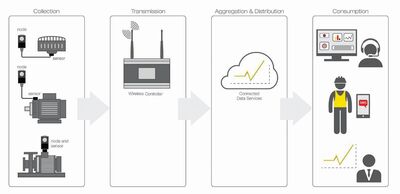
The controller can generally connect to a wireless sensor network and can locally deliver data to an HMI for visualisation of asset health, and also directly to the cloud where dashboards can be generated to reveal the health of rotating assets and send alerts for work orders via SMS or email.
Typical vibration sensors can monitor RMS velocity (10–1000 Hz), RMS high frequency acceleration (1–4 kHz) and temperature on rotating equipment.
The greatest value of these vibration solutions is that they can send (via desktop or cell phone) alerts and warnings, triggering work orders for maintenance on assets that need attention.
Summary
Keeping the factory running smoothly so it can generate revenue is a facility manager’s most important job, while unplanned production shutdown is their biggest worry. Although preventive maintenance is better than waiting for equipment to fail, predictive maintenance is significantly better because it’s best able to help managers avoid damage to rotating assets that halts production.
Predictive maintenance employs continuous condition-monitoring systems, primarily comprising sensors, a controller and specialised vibration-analysis software. By continuously monitoring equipment, predictive maintenance techniques let plant managers see bearing health trends and keep equipment well maintained, extending its life.
Because rotating assets require bearings to be in good health, facility managers who haven’t yet adopted predictive maintenance should consider the benefits it can bring to their plant. Considering that rotating assets like motors, pumps, fans and gearboxes are the life of the automated factory, moving to predictive maintenance is a relatively low-cost investment that enables plant operators to stay well ahead of maintenance issues and eliminate crises. Predictive maintenance will pay for itself many times over by keeping equipment productive longer and preventing unplanned factory downtime.
Critical industries need to know how to isolate, rather than ignore
It is time for critical infrastructure organisations to act on ASD's warnings about...
Demystifying zero trust in OT
Implementing zero trust in OT environments requires a holistic approach that unites informed...
The important role of software engineering in industry
To keep up with increasing complexity, the programming practices used in industry need to be...