The vegetable oil refining process
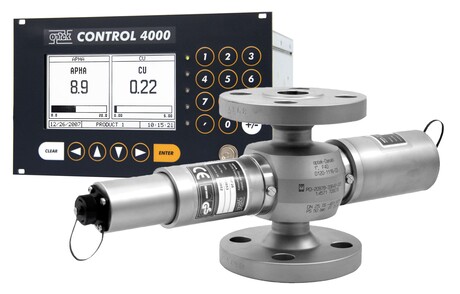
Monitoring oil refining processes such as winterisation, bleaching, hydrogenation, and finished oil quality in real time can be greatly improved with the use of optek inline colorimeters and turbidimeters. Out-of-spec product is immediately detected allowing process adjustments to be made quickly, avoiding costly product reworking. optek inline sensors not only deliver reliable and precise results but are also designed to withstand the harsh conditions in oil refining including high temperatures up to 240°C.
optek products used in vegetable and edible oil refining
C4000 multi-channel photometric converter
The C4000 converter is a multi-channel controller capable of operating all optek photometric sensors. The C4000 converter allows for easy programming and operation, and can supply up to four real-time configurable 4–20 mA output values correlated to any units of measure. The C4000 offers configurable relay alarms, can record and download process data, and can operate up to four sensors simultaneously.
The Control 4000 photometric converter is designed for optek ultraviolet (UV), visible (VIS), near-infrared (NIR) absorption-based and scattered light-based sensors. The graphic display can show absorbance, transmittance and concentration in real time and in any unit of measure such as CU, OD, %-Tr., ppm (DE), EBC, FTU, g/L and many others.
AF26 VIS/NIR dual-channel VIS/NIR absorption sensor
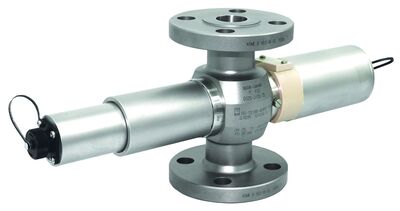
The AF26 is a high precision dual-channel colour sensor for inline operation; the secondary wavelength is designed to compensate the desired light absorbance measurement from any undesired light scattering influence, such as suspended solids, gas bubbles, immiscible fluids or window fouling. The AF26 sensor’s output can be correlated to almost any colour scale including APHA and Hazen.
The AF26 sensor provides accurate absorption measurements with high repeatability, linearity and resolution. Selected combinations of optical filters make it possible to focus on specific wavelengths ensuring suitable adaptation to the application. Additionally, NIST-traceable calibration accessories provide absolute measurement confidence.
Vegetable oil refining benefits
Vegetable oil refining benefits include:
- Improved vegetable and edible oil quality
- Reduce bleaching clay usage
- Conserve nickel catalyst
- Continuous process control
- Eliminate human interpretation errors
- Exact dosage of used supplements
- Timely intervention at process changes
- Reduced product loss
- Higher product yields
Using optek inline colorimeters and turbidimeters throughout the vegetable and edible oil processing minimises sampling and timely lab testing, while recording measurements inline and in real time. Operating costs are greatly reduced due to reduced losses, downtime, and reworking. optek inline measurements can improve filtration throughput, reduce recirculation time and reduce usage of filtration agents like bleaching clay and nickel catalyst.
Colour measurements for quality control
Colour measurements are important both after the bleaching and filtration processes and as a final quality check after deodorisation just prior to tank storage. Inline measurements provide process control of the refining and bleaching processes.
Bleaching and filtration
The bleaching process can be optimised very effectively using optek colorimeters. Monitoring the colour after the bleaching filter is the key to controlling the addition of bleaching clay, and the filtration process can be automatically set to a recycle mode until the desired clarity is achieved. Additionally, filtrate monitoring will immediately detect filter breaks and track filter performance — an excellent tool for quality assurance and quality control.
Control of chlorophyll concentration
The concentration of chlorophyll varies in oil seeds, and large amounts of chlorophyll reduce the shelf life of vegetable and other edible oils. Oils with higher concentrations of chlorophyll generally require an extra processing step where the oil is heated to break down the chlorophyll. Monitoring oil in the pipeline before it is sent to the bleaching process allows the highly concentrated chlorophyll oil to be diverted through the extra heating process while oil with a low concentration of chlorophyll moves into the bleaching process. The optek dual channel colorimeter AF26 is capable of measuring chlorophyll concentrations less than 30 ppb (parts per billion), all in real time and inline with high precision and repeatability.
Winterisation
The winterisation process for edible oils serves to remove high melting components like wax from the oil. Installed directly inline following the winterisation process, an optek TF16-N scattered light turbidimeter can provide real-time monitoring of the performance of the process. Any remaining high melting components (such as waxes) can be immediately detected and measured down to low PPM ranges and thereby greatly reduce losses due to rework of out-of-spec product.
Hydrogenation
Hydrogenation of oils applied in the production of solid fats and margarine is required to give the finished oil a higher melting temperature and better oxidation stability, improving the product’s resistance to spoilage. Generally, nickel-based catalysts are used in this process. Once the hydrogenation is complete, the nickel catalyst must be filtered off. Filtering off the catalyst can be controlled by an optek TF16-N turbidimeter capable of detecting very low catalyst concentrations, thus reducing the loss of nickel catalyst and optimising the filtration process while ensuring final product quality. An ATEX/FM version of the turbidimeter is available for installation in hazardous areas.
Next-generation in-line pH measurement for improved process control
The METTLER TOLEDO InPro X1 SLS provides a new option for reliable, glass-free...
How flow meters improve the performance of your dosing pumps
A pilot plant is an important step from lab-scale to commercial-scale production.
Weigh smarter with METTLER TOLEDO's IO-Link
Accurate weight measurement is critical in automated systems, impacting everything from batching...