Sparc Hydrogen pilot plant achieves sustained generation
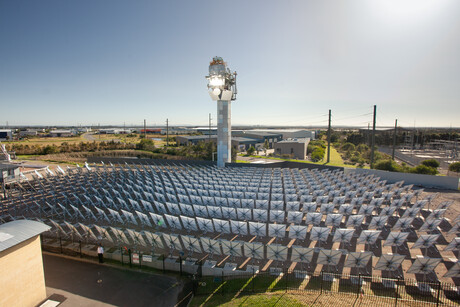
Sparc Technologies has announced that Sparc Hydrogen has achieved sustained hydrogen generation at its first-of-its-kind green hydrogen pilot plant in Roseworthy, South Australia. The milestone marks the transition from commissioning to operational testing under concentrated solar conditions — an important step towards commercialisation of Sparc Hydrogen’s photocatalytic water splitting (PWS) technology.
Sparc Hydrogen is a joint venture between Sparc Technologies, MIH2 Pty Ltd (a wholly owned subsidiary of Fortescue Ltd) and The University of Adelaide, which has been developing photocatalytic water splitting reactor technology since 2022.
“Sustained hydrogen generation at Roseworthy is a significant milestone for Sparc Hydrogen and the broader green hydrogen and photocatalytic water splitting industries,” said Sparc Managing Director Nick O’Loughlin. “Successful commissioning of this first-of-its-kind plant is the culmination of over 12 months of hard work since the commencement of the FEED study and positions Sparc Hydrogen at the global forefront of this emerging direct solar-to-hydrogen technology.
“I congratulate the project team and our partners, Fortescue and The University of Adelaide, on this significant achievement and look forward to showcasing the pilot plant as an example of the simplicity and scalability of Sparc Hydrogen’s reactor technology and how it can potentially unlock low-cost green hydrogen.”
The Roseworthy pilot plant represents a major step towards scaling and commercialising Sparc Hydrogen’s patented PWS reactor technology — enabling next-generation green hydrogen production that is scalable, modular and, importantly, requires limited electricity. The facility enables testing of different reactor designs and photocatalyst materials under real-world conditions supporting and validating laboratory testing. Sparc Hydrogen is not aware of any similar facilities for testing and scale-up of PWS under concentrated solar conditions.
With commissioning complete, the R&D team is now focused on testing Sparc Hydrogen’s PWS reactors with an initial focus on benchmarking across a range of solar concentrations, temperature and pressure conditions using photocatalyst materials from Shinshu University, Japan. Sparc Hydrogen is actively engaging with other photocatalyst developers with a view to conducting testing under real-world concentrated solar conditions at the Roseworthy pilot plant. Sparc Hydrogen expects the facility to become a globally significant site for R&D and commercialisation of PWS, reinforcing its first mover position in this emerging direct solar-to-hydrogen production technology.
The advantage of the technology is that PWS removes the reliance on solar or wind farms and expensive electrolysers to produce green hydrogen from water. This addresses a fundamental issue in the nascent green hydrogen industry: the cost of renewable electricity. PWS technology employs a photocatalyst and sunlight to produce green hydrogen directly from water.
Industrial electricity costs could halve by sharing infrastructure
Heavy industry could reduce electricity costs by up to 50% by sharing renewable infrastructure...
ARC awards $82.5m for new research hubs and training centres
$82.5 million has been awarded in Australian Government funding to 17 new research hubs and...
ARENA opens Round 3 of Solar Sunshot with $250m available
ARENA is seeking local and global solar innovators for the latest $250 million solar...