Sensor start-up declines $10m and stays in Australia
An optical sensor technology start-up has stuck to its guns and will continue to work from Australia, despite an appealing $10 million offer from Chinese investors to move offshore.
“It was an attractive offer, but in the end we wanted to keep this adventure going in Australia,” said Professor Francois Ladouceur from the UNSW School of Electrical Engineering and Telecommunications. Professor Ladouceur and his UNSW colleagues Dr Zourab Brodzeli and Dr Leonardo Silvestri are the founders of start-up company Zedelef, which is commercialising a new optical sensor that could have applications for the oil and gas, and electricity industries.
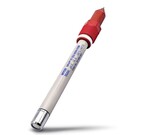
Their piece of hardware converts electrical signals from devices such as microphones and pressure sensors so they can be read optically. This means the signals can be transmitted via optical fibres, which allows the sensors to be distributed over very long distances as an array and means the signals can be read remotely.
“You can connect chains of the sensors and they could be distributed over hundreds of kilometres, along a pipeline for instance, to monitor things like flow rate, pressure and even corrosion,” said Professor Ladouceur.
Furthermore, the sensors are passive, meaning they require no power. “This means they are inherently safe, which is important for manned environments, particularly with oil and gas monitoring, where electronics pose a considerable risk.”
The group says the technology also has applications for the electricity industry to monitor transmission voltage across the network, and for national security.
In July this year, they were awarded an ARC linkage grant of $320,000 to work on an underwater surveillance and ocean-monitoring network with the defence company Thales Australia.
The lucrative Chinese offer would have required the company to be established outside Australia. And while a Chinese manufacturing base would have meant more rapid production of their technology, the team was concerned they might lose control over the technology and its underlying intellectual property.
“At the end of the day, we’re not necessarily in this for the money, we’re in it for the adventure, and because it’s going to make our lives more interesting,” said Professor Ladouceur. “We developed this at UNSW and we want to see Australia benefit.”
Zedelef is working closely with the university’s commercialisation company, NewSouth Innovations, and currently has investment proposals in Australia between $600,000 and $1.2 million that could help them bring their sensors to market by mid-2014.
ARENA funds major industrial heat electrification project
A project at Rio Tinto’s Gladstone alumina refinery aims to demonstrate new pathway for...
ABB enters into joint venture with Mitsubishi Electric
ABB to hold a controlling 51% stake in a joint venture formed with Mitsubishi Electric's...
Former mine site at Teralba to be new train manufacturing hub
The NSW Government has announced a former mine site at Teralba as the preferred location for a...