DroneShield awarded lucrative US defence contract
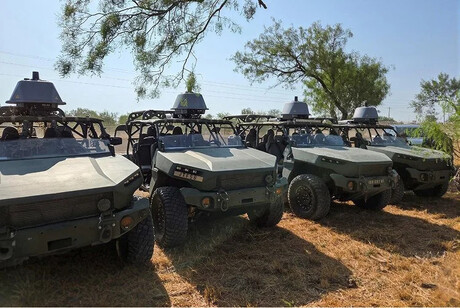
Australian counter-drone technology company DroneShield has announced it has been awarded an Indefinite Delivery, Indefinite Quantity (IDIQ) contract for the U.S. Department of Defense. The contract will support the Joint Interagency Task Force 401 (JIATF-401)’s Domestic Shield initiative, with a maximum contract value of up to US$500 million over three years.
The award establishes a streamlined procurement pathway for DroneShield’s counter-UAS capabilities to support Domestic Shield requirements and the rapid fielding of technology to protect defence-critical infrastructure and other high-priority locations across the United States.
Domestic Shield is a JIATF-401 initiative focused on accelerating the deployment of counter-UAS capabilities in response to the rapidly evolving threat posed by unmanned aircraft systems (sUAS).
“Defending against small UAS threats is an immediate homeland defence requirement, and rapidly fielding proven technology is critical to the mission,” said Nate Webb, Director of Strategic Partnerships at DroneShield. “DroneShield continues to offer field-proven capabilities while investing in next-generation technology designed to evolve with the threat. This award provides a streamlined pathway to deliver those capabilities to end users who need them.”
DroneShield has previously delivered DroneSentry-X Mk2, on-the-move counter-UAS capabilities in support of JIATF-401 requirements, including successful installation and acceptance of deployed technology. DroneShield capabilities are also represented on the JIATF-401 Counter-UAS Marketplace, established to accelerate access to vetted counter-UAS technologies.
DroneShield provides counter-drone technology across dismounted, mobile and fixed-site operations, including radio frequency sensing, electronic countermeasures, command-and-control, artificial intelligence and multi-sensor integration. Its modular architecture enables capabilities to be deployed independently or integrated with third-party sensors and effectors to meet evolving operational requirements.
CCEP announces Warmfill line in Victorian plant
Coca-Cola Europacific Partners has opened a new Warmfill production line in Moorabbin as demand...
Honeywell and Keppel to advance low-carbon fuels development in APAC
A partnership between Honeywell Technologies and Keppel Ltd aims to help meet Asia’s...
AirTrunk and European Energy to build renewables in the Hunter
New Hunter renewable projects aim to add more than 600 MW of new generation plus 800 MWh of...