Australia secures EU Free Trade Agreement
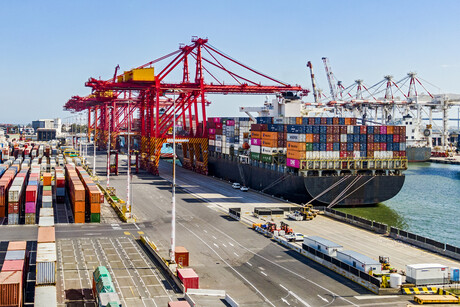
The federal government has announced that Australia has finalised a Free Trade Agreement (FTA) with the European Union, the world’s second-largest economy, after eight years of negotiation. The deal is expected to expand market access for Australian manufacturers and strengthen economic ties.
The Australia–European Union Free Trade Agreement will lower trade and investment barriers between Australia and the European Union — a market of around 450 million people.
Prime Minister Anthony Albanese and President of the European Commission Ursula von der Leyen, together with the Minister for Trade and Tourism Senator Don Farrell and European Commissioner for Trade and Economic Security Maroš Šefčovič, announced the conclusion of negotiations for a free trade agreement which, together with the Australia–EU Security and Defence partnership, is a key aspect of a growing strategic relationship.
The government says the trade agreement will result in 98% of the current value of Australia’s exports entering the European Union duty free.
Australian farmers and producers will benefit from the elimination of almost all European Union tariffs on agricultural products. This includes wine, nuts, fruit and vegetables, honey, olive oil, most dairy products, wheat and barley, and seafood.
For example, Australian wine producers and exporters will benefit to the tune of around $37 million annually with the removal of European Union import tariffs.
For other important agricultural products, the agreement delivers commercially meaningful access through new or expanded tariff rate quota volumes, including for beef, sheep meat, sugar, rice, wheat gluten, skimmed milk powder and natural butter.
The removal of most Australian tariffs on imports from the EU will make things like European wine, spirits, biscuits, chocolates and pasta cheaper at Aussie checkouts. Farmers and businesses will also benefit from cheaper motor vehicles and machinery.
Almost all Australian exports of manufactured goods and mineral resources will face zero import tariffs into the European Union. For example, the elimination of European Union tariffs on Australian critical minerals and hydrogen will support the Australian Government’s ambition for Australia to become a renewable energy superpower and help stabilise supply chains.
The trade agreement will support investment in both directions. The European Union was Australia’s second largest source of foreign investment in 2024, with total investment stock worth $869.3 billion.
Australian companies, including small and medium-sized enterprises, will have better access to bid for lucrative European government contracts, worth around $845 billion annually, including for rail and construction.
Australian service providers will have greater market access to the European Union, including in financial services, education, tourism and communications. Australian professionals will be able to travel to the European Union more easily and will benefit from streamlined recognition of their Australian qualifications.
“Australia’s relationship with the European Union continues to go from strength to strength,” Albanese said. “I am proud that we have been able to secure this deal, which will deliver benefits for both Australia and the European Union for generations to come.
“This deal creates major new opportunities for Australian exporters in the European Union’s massive $30 trillion economy, and will reduce costs for Australian consumers.”
“This hard-fought deal delivers real commercial gains for Australian exporters, farmers and producers into a market that has been difficult to enter or effectively closed for decades,” Farrell said. “The removal of EU tariffs on most of Australia’s exports gives Australian exporters the opportunity to diversify trade with 27 European countries and 450 million consumers.
“This is a strategically important and economically valuable agreement at a time when Australian exporters are navigating choppy trade waters.”
The Agreement will enter into force when both Australia and the European Union have completed their domestic processes.
NeoSmelt joins HILT CRC in low-emissions ironmaking research
NeoSmelt is investigating the development of a direct reduced iron electric smelting furnace...
Former mine site at Teralba to be new train manufacturing hub
The NSW Government has announced a former mine site at Teralba as the preferred location for a...
Weld Australia joins Additive Manufacturing CRC
New partnership will connect Australia's welding industry with a $57.5m national research...