Electromagnetic flowmeters, or magmeters, comprise a transmitter and sensor that together measure flow. The magnetic flowmeter’s sensor is placed inline and measures an induced voltage generated by the fluid as it flows through a pipe.
The principle of the electromagnetic flowmeter (volumetric flowmeter) is based on Faraday’s law of electromagnetic induction. The coils of the flowmeter generate a magnetic field orthogonal to the flow direction. According to Faraday’s law of induction, a conductive liquid passing through the magnetic field induces a current between the two electrodes of the flowmeter. The higher the flow velocity, the higher the induced voltage. This voltage signal is converted into a standard signal (eg, 4–20 mA or pulse) by the integrated electronics.
Electromagnetic flowmeters have basic application in demanding flow and custody transfer measurements. They have designs and liner materials for various applications: from potable water to extremely adhesive, abrasive or aggressive fluids.
This electromagnetic flowmeter, being a non-intrusive type, can be used in general for fluid with an electrical conductivity greater than 5 μS/cm. Fluids like sand water slurry, coal powder, other slurries, sewage, wood pulp, chemicals, water (other than distilled water) in large pipelines, hot fluids, high viscosity fluids in the food processing industries and cryogenic fluids can be metered by the electromagnetic flowmeter.
Modsen electromagnetic flowmeters come in wafer and flanged versions and a large choice of nominal sizes from DN3 to DN3000.
Phone: 03 9837 5203
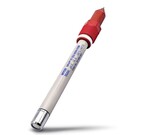
Rosemount 350A digital pH/ORP sensor
The Rosemount 350A pH/ORP sensor is designed for harsh processes and simplifies installation and...
WIKA ILT radar sensor
The ILT radar sensor is a compact, free-beam sensor that enables non-contact level measurement,...
ABB NINVA non-invasive temperature instruments
The NINVA Integrated, NINVA Remote and NINVA Compact non-invasive temperature instrumentss are...
Learn More
I am interested in Modsen electromagnetic flowmeters.
Complete the form and a supplier representative will be in touch.