UNSW researchers find way to turn high-emissions waste into fertiliser
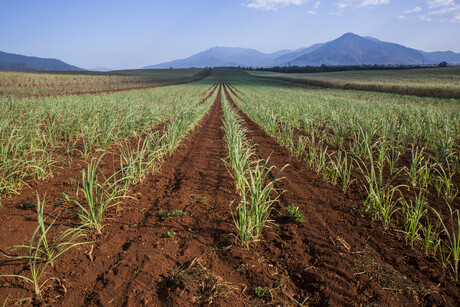
UNSW engineers say they have tackled a longstanding problem at the heart of global agriculture: how to make urea for fertiliser without the intensity of emissions associated with fossil fuel-powered factories. The solution is outlined in a study published recently in Nature Communications.
Corresponding author Associate Professor and Scientia Fellow Dr Rahman Daiyan from UNSW Sydney’s School of Minerals and Energy Resources Engineering said the work is part of a broader push to go beyond the global move to green ammonia, focusing instead on decarbonising the entire fertiliser chain.
“Urea is the fertiliser used to feed the crops for more than half of the world’s population,” he said. “But currently, it’s made from natural gas or coal. It’s a very fossil fuel-intensive, high-temperature, high-pressure technology with huge emissions.”
Industrial activities release enormous amounts of carbon dioxide (CO2) into the atmosphere each year, with around 40 billion tonnes released in 2024 alone. At the same time, nitrogen pollutants such as nitrate and nitrite — collectively referred to as NOx species — from agriculture and industry contaminate waterways and ecosystems.
The UNSW study brings these two problems together. Using renewable electricity to trigger an electrochemical reaction, the researchers could directly couple CO2 with nitrogen pollutants to form urea.
“Making carbon and nitrogen bond together in a controlled and reliable way is extremely difficult,” said the study’s first author, UNSW PhD student Putri Ramadhany. “To overcome this challenge, we designed a catalyst that works at an atomic scale and can hold carbon- and nitrogen-based molecules together long enough for them to react.”
The UNSW-developed catalyst — made of copper and cobalt — demonstrated a strong synergy between the two metals, and improved urea production when compared with existing systems.
Daiyan said it’s a promising foundation for a circular process that, in future, could convert captured carbon dioxide and nitrogen pollutants into urea. This, he said, is a route that removes pollution, creates valuable chemicals and runs on renewable electricity.
“We’ve been trying to look into pathways for decarbonising urea production,” Daiyan said. “The vision is zero-carbon urea where we directly couple waste carbon dioxide with nitrogen pollutants using renewable electricity, rather than relying on ammonia as an intermediate. That allows us to run the system on solar and wind, avoid high temperatures and pressures and reduce emissions.
Although Australia is a major agricultural exporter, it does not produce enough urea domestically and so is a net importer of the fertiliser — relying heavily on overseas supply to meet demand. In 2024, urea imports reached around 3.8 million tonnes. Daiyan said this dependence is “a pity” as well as a strategic vulnerability.
If Australia could produce its own clean, locally made urea from waste carbon and renewable electricity, it would strengthen supply chains while lowering emissions. This is especially important as the government regulation of emissions starts to go beyond carbon dioxide.
Daiyan said he is mindful of the carbon sources he works with. He said the aim is to use unavoidable emissions from cement factories or biogenic sources like agricultural waste.
The technology is still under development, but early results show promising selectivity under laboratory conditions. Rather than relying on direct air capture, the approach is designed to use carbon dioxide that is already generated from these industrial and biogenic emission streams.
New wastewater facility opens in Western Sydney
The $1.2 billion Badu Yarragul Water Resource Recovery Facility at Kemps Creek aims to help...
Pope Packaging completes Adelaide facility expansion
With a major expansion of its Adelaide paper sack manufacturing operation, Pope Packaging has...
Victoria opens new training program round to address skills gaps
Grants of up to $500,000 are available to develop practical and innovative training courses...